Updated Laboratory Requirements in the Ontario Fire Code
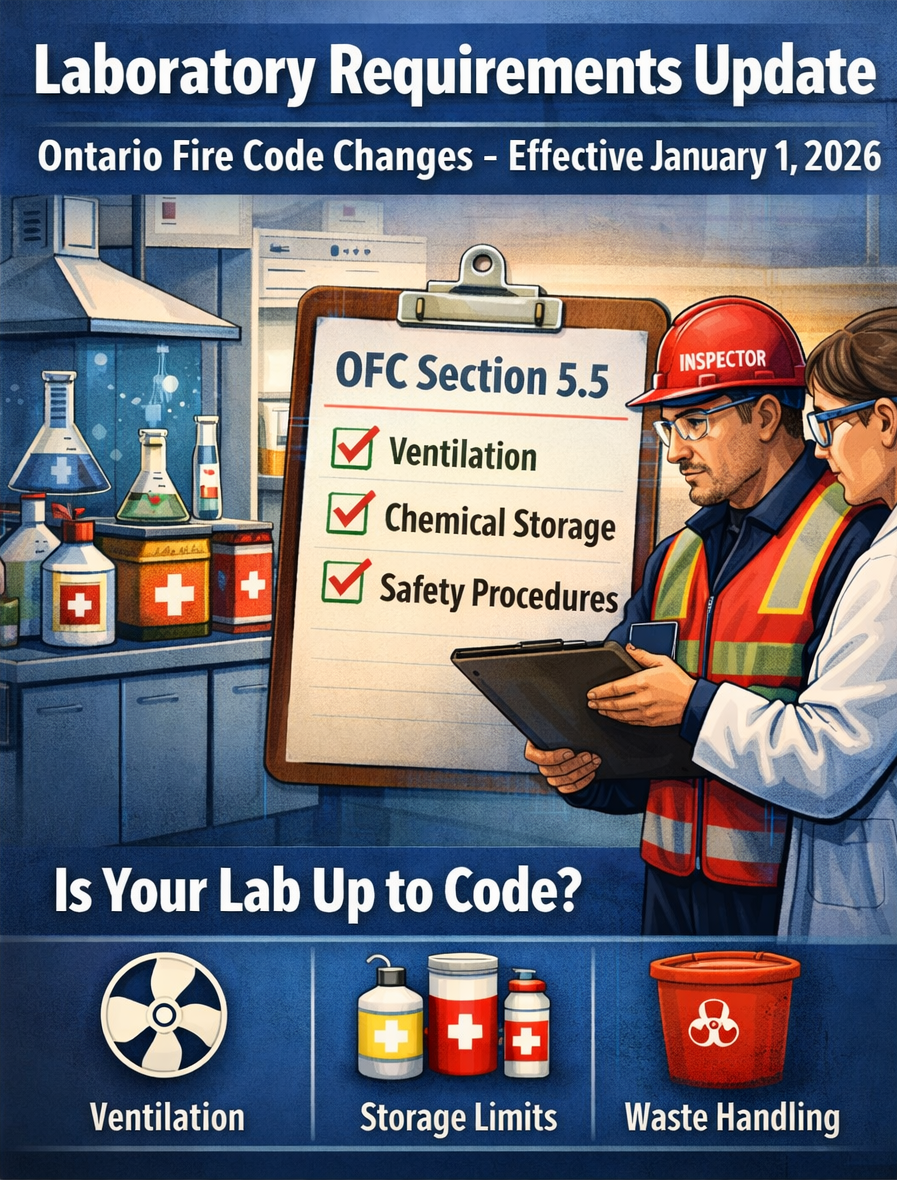
As part of the January 1, 2026 Ontario Fire Code updates, laboratory requirements have been relocated from Section 4.12 to Section 5.5. While this change improves organization within the Code, it also comes with substantive revisions intended to better harmonize Ontario’s requirements with the National Fire Code of Canada.
The revised laboratory provisions provide clearer direction for both building owners and authorities having jurisdiction, particularly where dangerous goods are used, stored, or handled in laboratory environments.
Key areas of clarification include:
- Ventilation requirements and assumptions,
- Identification and labeling of dangerous goods and laboratory waste,
- Limits on the quantity of dangerous goods permitted in laboratory spaces, and
- Expectations related to documentation and operational controls.
Why This Matters
Like all Ontario Fire Code provisions, these laboratory requirements are retroactive. They apply to existing laboratories and current operations, not just new or renovated lab spaces.
Owners and operators should review their laboratory programs and documentation, including:
- Dangerous goods inventories,
- Waste handling and disposal procedures,
- Ventilation design assumptions, and
- Emergency planning and fire safety documentation.
Ensuring alignment with the updated Section 5.5 requirements helps support regulatory compliance, improves safety outcomes, and provides clearer justification during inspections or plan reviews.