Close



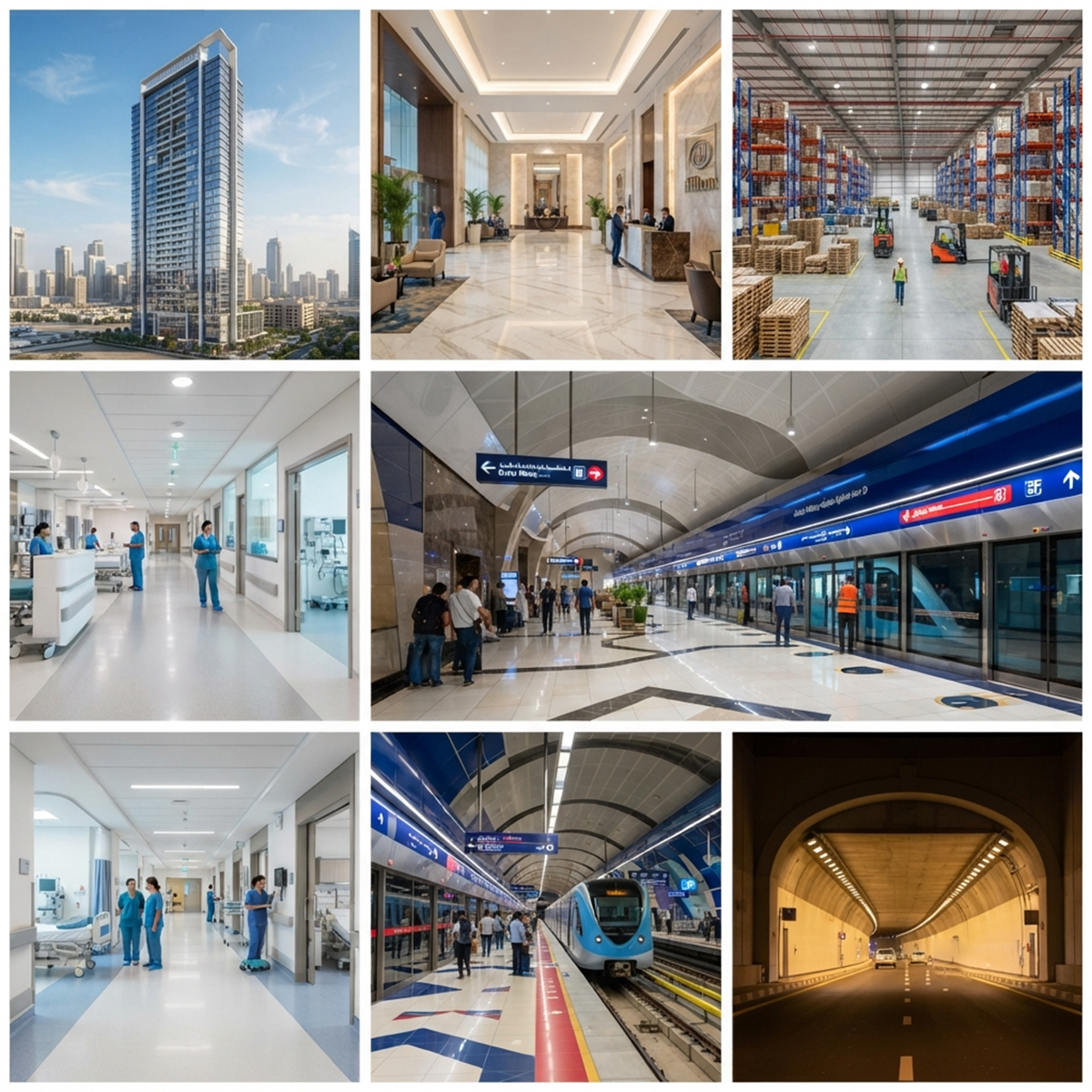
Regulatory requirements differ between countries. In the UAE, Civil Defence authorities may require fire risk assessments or fire audits of existing buildings to be carried out by an approved consultancy, and Vortex Fire is a registered House of Expertise with the UAE Civil Defence. In Australia, building owners have ongoing obligations to maintain essential safety measures under state and territory legislation. In Canada, existing buildings must comply with the applicable provincial or national fire code, which is enforced by the authority having jurisdiction. With offices across the Middle East, Australia and Canada, Vortex Fire delivers FRAs that satisfy local regulatory expectations while applying a consistent international standard of practice.
| FRA Method | Advantages | Limitations |
|---|---|---|
|
Qualitative fire risk assessment
A qualitative FRA relies on the professional judgement of an experienced fire safety engineer. Hazards are identified through inspection and document review, and risk is described in categories such as low, medium or high rather than in numbers. This is the most widely used approach and is suitable for most buildings. |
Fast and cost-effective. Easy for owners, facility managers and non-technical stakeholders to understand and act on. Well suited to standard building types where hazards and consequences are well understood. |
Outcomes depend heavily on the assessor's competence and experience. Risk rankings are subjective and can be difficult to defend where stakeholders disagree. Less suited to complex or unusual buildings where intuition alone may miss interactions between hazards. |
|
Semi-quantitative fire risk assessment
|
More consistent and transparent than a purely qualitative study. Produces a defensible prioritisation of remedial actions, which is valuable when budgeting upgrade works across a building or a portfolio. Still relatively quick and affordable. |
The scores are structured judgements, not measurements. A risk matrix can give a false impression of precision, and poorly calibrated scales can distort priorities. It still depends on the assessor's competence, just in a more organised framework. |
|
Quantitative Risk Assessment (QRA)
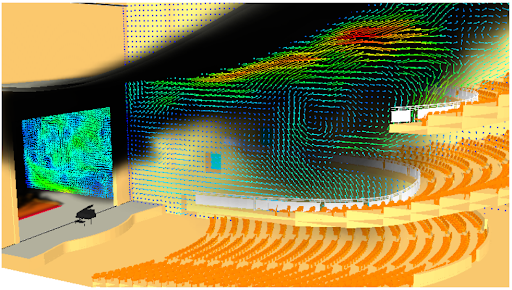
A Quantitative Risk Assessment, or QRA, uses numerical data, engineering calculations, and modelling to explicitly estimate risk. This can include fire and smoke modelling (CFD), evacuation modelling, event tree and fault tree analysis, and historical failure and ignition data. Results are expressed in measurable terms, such as the probability of a given consequence, and compared against defined acceptance criteria. QRA is well established in tunnel, metro, rail and industrial projects, where authorities and standards often expect a quantified demonstration that the level of risk is acceptable. |
The most rigorous and defensible methodology. Can demonstrate the actual level of safety achieved, not just code compliance, which makes it powerful for performance-based justifications, authority negotiations and high-value insurance discussions. Essential for complex or high-consequence facilities such as tunnels, metros, airports, industrial plants and supertall buildings. |
Significantly more expensive and time-consuming. Requires specialist modelling capability and reliable input data, which are not always available. The apparent precision of numerical outputs can be misleading if the underlying assumptions are weak, so the analysis must be carried out and reviewed by experienced practitioners. |
A qualitative FRA relies on the professional judgement of an experienced fire safety engineer. Hazards are identified through inspection and document review, and risk is described in categories such as low, medium or high rather than in numbers. This is the most widely used approach and is suitable for most buildings.
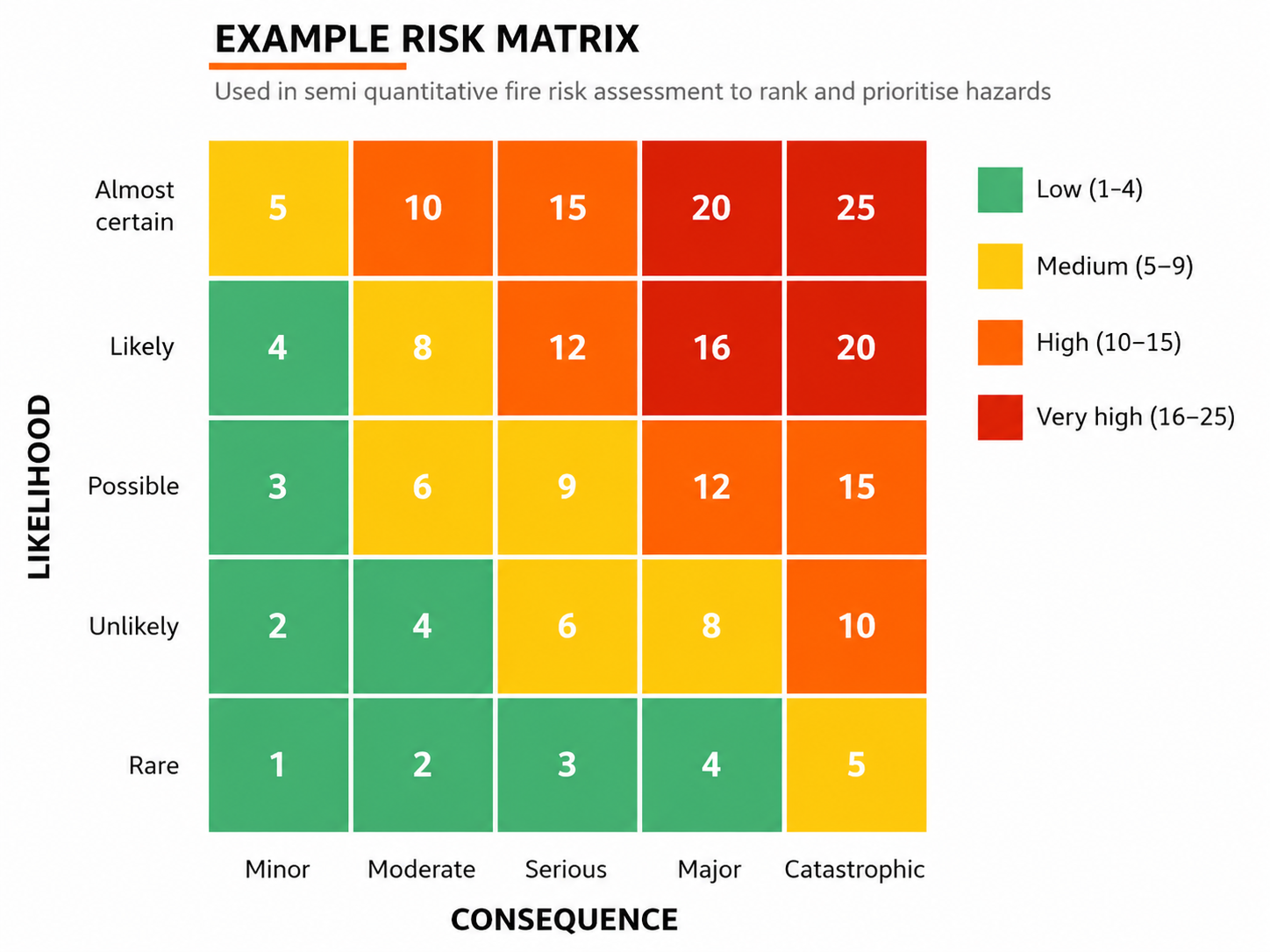
Semi-quantitative fire risk assessment A semi-quantitative FRA adds structure to professional judgement. Likelihood and consequence are scored on defined scales and combined, typically through a risk matrix, to produce a numerical risk rating for each hazard. This allows risks to be ranked consistently and remedial works to be prioritised objectively.
A Quantitative Risk Assessment, or QRA, uses numerical data, engineering calculations, and modelling to explicitly estimate risk. This can include fire and smoke modelling (CFD), evacuation modelling, event tree and fault tree analysis, and historical failure and ignition data. Results are expressed in measurable terms, such as the probability of a given consequence, and compared against defined acceptance criteria. QRA is well established in tunnel, metro, rail and industrial projects, where authorities and standards often expect a quantified demonstration that the level of risk is acceptable.
Fast and cost-effective. Easy for owners, facility managers and non-technical stakeholders to understand and act on. Well suited to standard building types where hazards and consequences are well understood.
More consistent and transparent than a purely qualitative study. Produces a defensible prioritisation of remedial actions, which is valuable when budgeting upgrade works across a building or a portfolio. Still relatively quick and affordable.
The most rigorous and defensible methodology. Can demonstrate the actual level of safety achieved, not just code compliance, which makes it powerful for performance-based justifications, authority negotiations and high-value insurance discussions. Essential for complex or high-consequence facilities such as tunnels, metros, airports, industrial plants and supertall buildings.
Outcomes depend heavily on the assessor's competence and experience. Risk rankings are subjective and can be difficult to defend where stakeholders disagree. Less suited to complex or unusual buildings where intuition alone may miss interactions between hazards.
The scores are structured judgements, not measurements. A risk matrix can give a false impression of precision, and poorly calibrated scales can distort priorities. It still depends on the assessor's competence, just in a more organised framework.
Significantly more expensive and time-consuming. Requires specialist modelling capability and reliable input data, which are not always available. The apparent precision of numerical outputs can be misleading if the underlying assumptions are weak, so the analysis must be carried out and reviewed by experienced practitioners.
Qualitative fire risk assessment
A qualitative FRA relies on the professional judgement of an experienced fire safety engineer. Hazards are identified through inspection and document review, and risk is described in categories such as low, medium or high rather than in numbers. This is the most widely used approach and is suitable for most buildings.
Fast and cost-effective. Easy for owners, facility managers and non-technical stakeholders to understand and act on. Well suited to standard building types where hazards and consequences are well understood.
Outcomes depend heavily on the assessor's competence and experience. Risk rankings are subjective and can be difficult to defend where stakeholders disagree. Less suited to complex or unusual buildings where intuition alone may miss interactions between hazards.
Semi-quantitative fire risk assessment
A semi-quantitative FRA adds structure to professional judgement. Likelihood and consequence are scored on defined scales and combined, typically through a risk matrix, to produce a numerical risk rating for each hazard. This allows risks to be ranked consistently and remedial works to be prioritised objectively.
More consistent and transparent than a purely qualitative study. Produces a defensible prioritisation of remedial actions, which is valuable when budgeting upgrade works across a building or a portfolio. Still relatively quick and affordable.
The scores are structured judgements, not measurements. A risk matrix can give a false impression of precision, and poorly calibrated scales can distort priorities. It still depends on the assessor's competence, just in a more organised framework.
Quantitative Risk Assessment (QRA)
A Quantitative Risk Assessment, or QRA, uses numerical data, engineering calculations, and modelling to explicitly estimate risk. This can include fire and smoke modelling (CFD), evacuation modelling, event tree and fault tree analysis, and historical failure and ignition data. Results are expressed in measurable terms, such as the probability of a given consequence, and compared against defined acceptance criteria. QRA is well established in tunnel, metro, rail and industrial projects, where authorities and standards often expect a quantified demonstration that the level of risk is acceptable.
The most rigorous and defensible methodology. Can demonstrate the actual level of safety achieved, not just code compliance, which makes it powerful for performance-based justifications, authority negotiations and high-value insurance discussions. Essential for complex or high-consequence facilities such as tunnels, metros, airports, industrial plants and supertall buildings.
Significantly more expensive and time-consuming. Requires specialist modelling capability and reliable input data, which are not always available. The apparent precision of numerical outputs can be misleading if the underlying assumptions are weak, so the analysis must be carried out and reviewed by experienced practitioners.