



Fire Protection at the AI Data Centre Inflection Point
Key takeawaysCompliance is not coverage.
NFPA 75 does not address lithium-ion batteries or liquid cooling in any meaningful depth.
The battery is already inside.
The Singapore and Daejeon data centre fires were both UPS battery fires, and both took close to a full day or more to bring under control.
Start early.
NFPA 855 (2026) makes HMA the default, and FM water demands can drive pump and tank sizing. Both belong at concept stage.
An NFPA 75 compliant design for a modern AI data centre can tick every box and still leave the real hazard unaddressed. Rack densities have climbed from the 5 to 10 kW typical of conventional halls[1] to 50 to 130 kW and above on GPU clusters[2], and direct liquid cooling (DLC) has moved from specialist retrofit to base design. At the same time, grid connection constraints are bringing large lithium-ion battery energy storage systems (BESS) onto data centre campuses, often right alongside the building. Neither NFPA 75 nor NFPA 76 deals with these hazards in any meaningful depth. The standards are starting to respond. The 2026 edition of NFPA 855 is out, and NFPA is fast-tracking NFPA 800, a new Battery Safety Code, through its provisional standard process, a route it keeps for urgent life safety issues[3][4].
Where NFPA 75 and 76 fall short
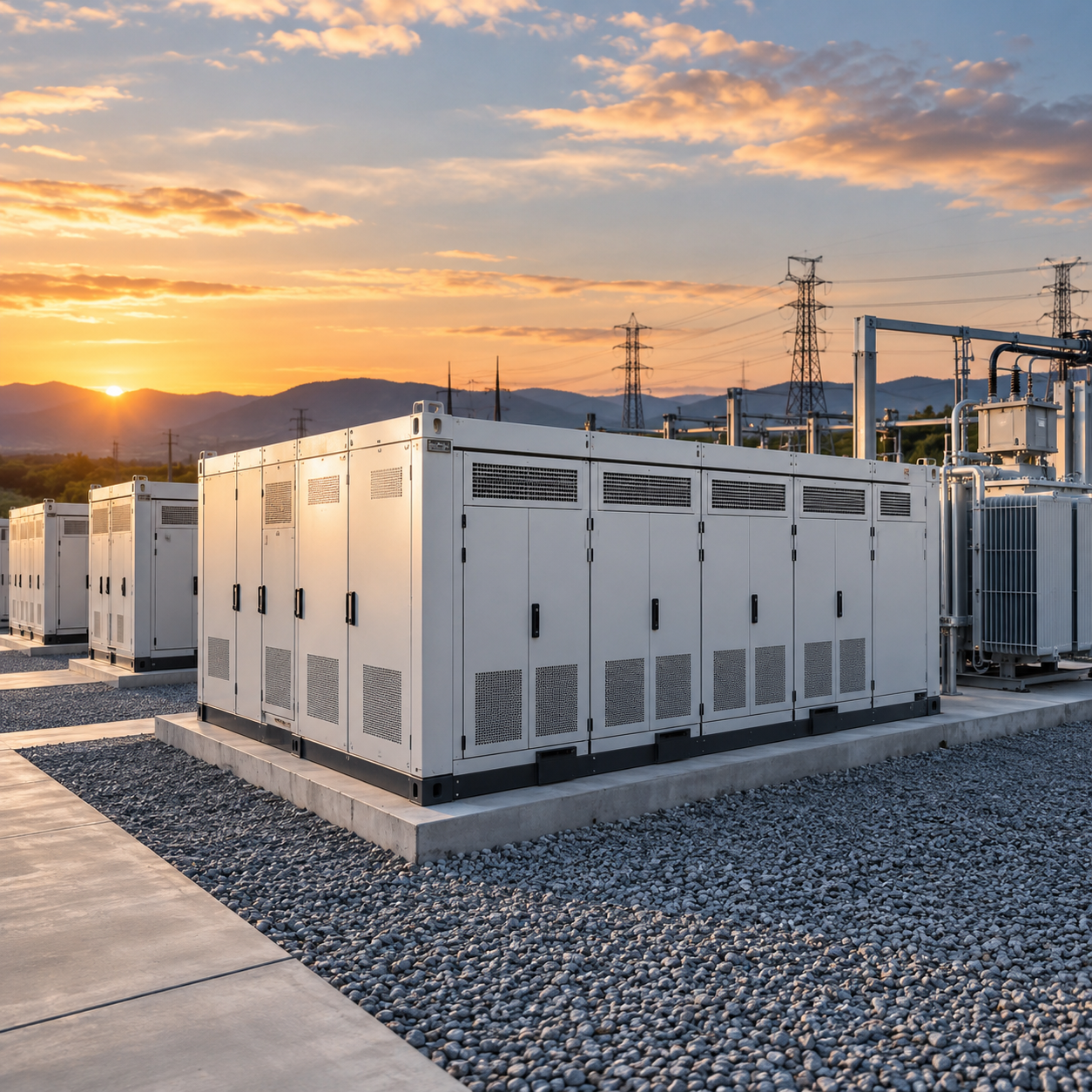
NFPA 75 and 76 size detection and suppression around the combustion products of cables and electronic components. Neither anticipates a fire driven by off gassing lithium ion cells, or a coolant distribution network running above the protected equipment. Designing a hall to NFPA 75 alone, when it sits next to a battery room or carries DLC manifolds, leaves a gap. The authority having jurisdiction (AHJ) may approve it, but that approval doesn't reflect the failure modes that actually matter. To be clear, NFPA 855 has applied to lithium-ion UPS batteries above 20 kWh in aggregate since its first edition in 2020, so the battery room itself is rarely the blind spot[5][6]. The gap opens when the hall is treated as an NFPA 75 problem and the batteries, cooling and fire strategy are designed in separate silos.
Thermal runaway: recent losses and FM 5-33
Two recent fires show what is at stake. In September 2024, a lithium-ion battery fire in the battery rooms of a Singapore data centre took around 36 hours of firefighting to bring under control[7][8]. In September 2025, a lithium-ion UPS battery fire at South Korea's national government data centre in Daejeon burned for around 22 hours and took 647 government systems offline[9][10]. Neither involved utility scale storage. Both were UPS batteries, which is the point: the battery hazard is already inside the building.
Without local code adoption, FM Data Sheet 5-33[11] remains the most specific design reference for the batteries, with DS 5-32[12] covering the data hall itself. FM's 2019 large scale test programme for lithium-ion ESS supported a minimum density of 12.2 mm/min (0.3 gpm/ft²) over a 230 m² (2,500 ft²) demand area, with a water supply duration of at least 90 minutes, before hose stream allowance[13]. The data sheet has been revised since, so check the current edition for project values. That water demand is the line item that blows out fire pump and tank sizing on retrofit sites. Flag it at concept stage, not at hydraulic calculation submission.
NFPA 855 (2026) and NFPA 800
The 2026 edition of NFPA 855 makes hazard mitigation analysis (HMA) the default expectation for most energy storage system (ESS) installations, rather than a threshold trigger. It adds large-scale fire testing alongside UL 9540A to demonstrate that a fire in one unit will not propagate to the next, expands early detection options for lithium-ion battery storage to include thermal imaging and radiant energy detection alongside smoke detection, strengthens explosion control requirements, and adds a new section on ESS used as emergency or stored emergency power supply systems (EPSS and SEPSS)[14][15][16]. Its annex guidance now recommends that a registered design professional with fire protection engineering experience lead the HMA, rather than someone reviewing someone else's work.
NFPA 800 is being developed as a provisional standard, with public comment closing in January 2026 (issue expected as early as autumn 2026[3]), and aims to provide full lifecycle coverage from manufacture through disposal. That may help clarify where responsibility sits between manufacturers, installers and facility owners, which 855 does not fully address. Neither document has yet caught up with jurisdictions that adopt NFPA editions by year into local code, so expect to be making the case for consensus standards as design intent to AHJs for a while yet.

Sprinkler protection for ESS
A wet-pipe sprinkler system is not, in itself, disqualified for protection of an Energy Storage System (ESS).
NFPA 855 requires sprinkler protection for applicable ESS installations to be provided in accordance with NFPA 13 or an equivalent standard. For ESS units (or groups) with stored energy up to 50 kWh, NFPA 855 specifies a minimum sprinkler discharge density of 0.3 gpm/ft² (12.2 mm/min), based on the applicable design area, unless a lower density is justified and approved based on fire and explosion testing[17].
For ESS units (or groups) with stored energy exceeding 50 kWh, NFPA 855 does not prescribe a fixed sprinkler discharge density. Instead, the required sprinkler density is to be established based on fire and explosion testing in accordance with Section 9.2 of NFPA 855.
Accordingly, a wet-pipe sprinkler system can be used for ESS protection; however, where the ESS exceeds 50 kWh, the sprinkler discharge density should be substantiated by the applicable fire and explosion testing for the specific ESS configuration. A pre-action sprinkler system is preferred to reduce the impact of accidental discharge.
Direct Liquid Cooling (DLC): the open question
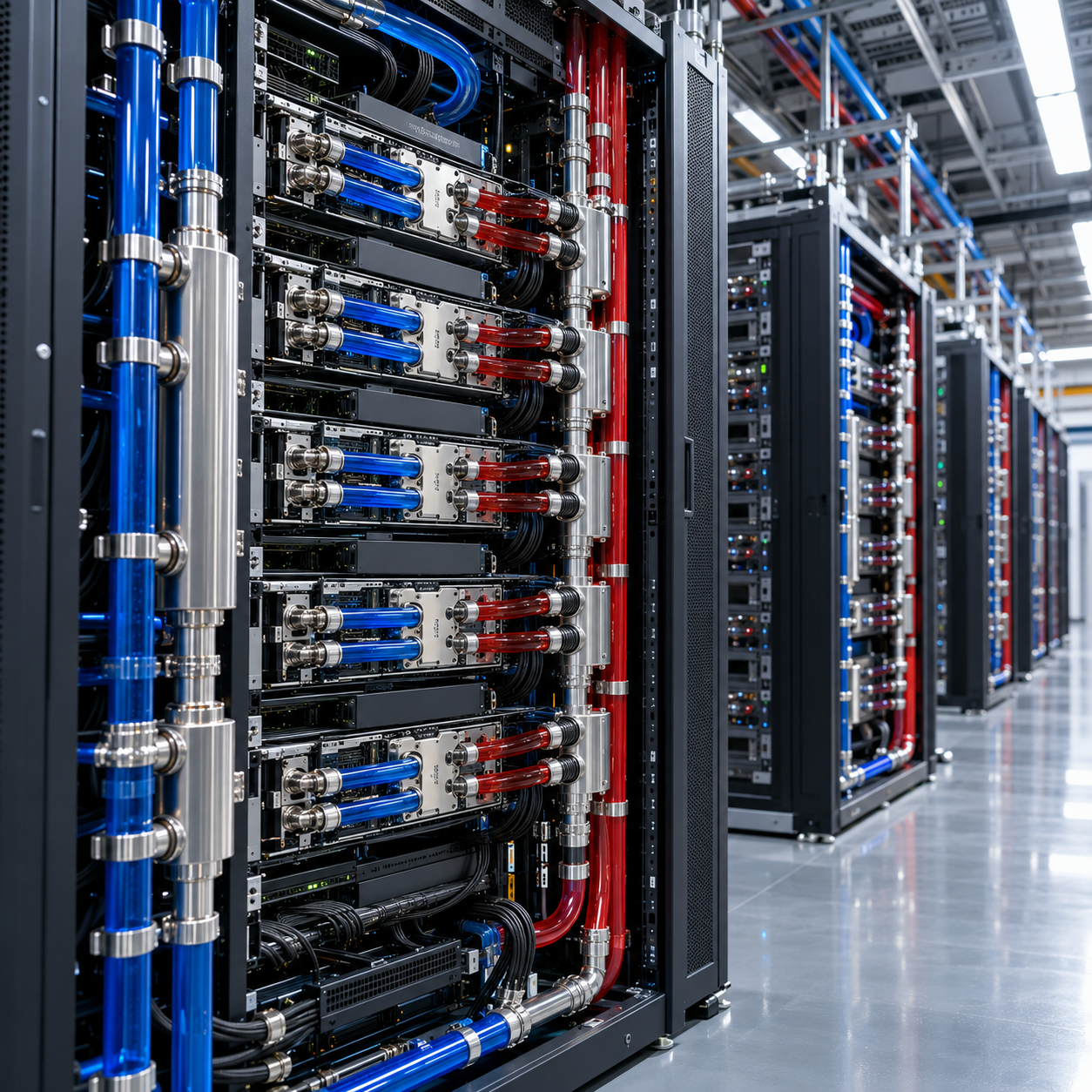
DLC needs leak detection and drainage coordination that wasn't a design consideration in an air-cooled hall, because a coolant leak and an ignition source can now plausibly coincide. None of this has the specificity of FM 5-33 yet. DLC deployment is ahead of the suppression-compatibility literature, and that gap is sitting on the specifying engineer's judgement until a data sheet or standard closes it.
It is also worth separating the two technologies. Most direct to chip systems circulate water glycol mixtures, which are not a fuel in themselves; the risk is an electrical fault from a leak. Immersion cooling with hydrocarbon based dielectric fluids is different, as it brings a combustible liquid into the hall and should be treated as a fuel load.
Practice implications
NFPA 75 sign-off doesn't cover BESS rooms or coolant-dense halls. Treat this as a scope gap to close explicitly, not an assumption to leave implicit. HMA is the baseline under NFPA 855-2026, not a specialist add-on, and that has design-programme implications if it isn't scoped in from day one. And because the live failure modes sit at the electrical/mechanical/fire boundary, the fire protection engineer needs to be in the cooling and power architecture conversations, not brought in to bless a finished design against a standard that was never going to cover it.
Every project sits under its own local code. NFPA standards are a strong reference framework, but how they are adopted, amended and enforced comes down to your jurisdiction and your authority. If you would like to understand what this means for your data centre or BESS project, talk to the Vortex Fire team at www.vortexfire.com.
