



The installation of electric vehicle (EV) charging infrastructure within existing basement car parks presents a challenge that extends beyond electrical compliance. For fire engineers, the fundamental consideration is whether the proposed modification remains consistent with the fire safety design basis under which the building was originally approved.
An existing basement car park may have been designed in accordance with the applicable fire and life safety regulations, with its sprinkler protection, smoke management systems, means of escape and firefighting provisions established around a defined set of design assumptions. The subsequent introduction of EV charging facilities does not necessarily invalidate these provisions. However, neither should their continued adequacy be assumed without examining the nature and extent of the modification.
The Significance of the Original Design Basis
Fire safety compliance is established through an integrated design approach. The performance of individual systems must be considered in relation to the fire scenarios, building configuration and operational conditions for which they were designed.
When EV charging stations are introduced into an existing basement car park, the assessment should therefore begin with the original approved fire strategy, rather than with the specification of the charging equipment.
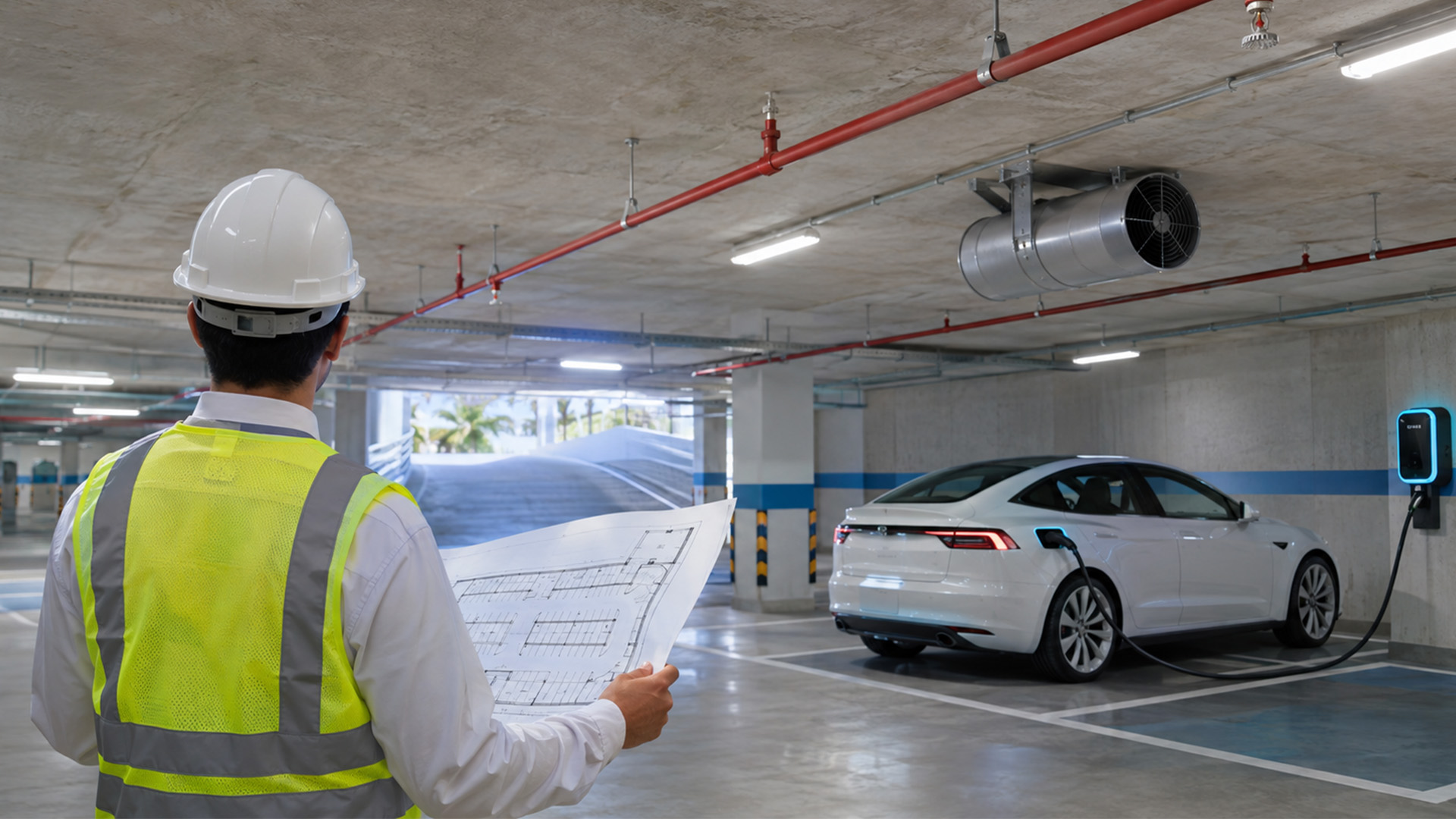
A key consideration is whether the proposed installation introduces credible fire scenarios or operational conditions that were not adequately taken into account in the original design.
Although lithium-ion battery thermal runaway is frequently associated with EV fire hazards, it is important to distinguish between an electrical fault involving charging equipment, a conventional vehicle fire and a fire involving the vehicle’s high-voltage battery. These scenarios can exhibit different fire development characteristics and present different challenges for intervention.
The presence of EV charging infrastructure alone does not establish that the existing fire protection systems are inadequate. The engineering assessment must determine whether the proposed modification materially affects the assumptions underpinning the approved design.
Fire Safety Compliance and the Regulatory Framework
In the UAE, the assessment should be undertaken with reference to the applicable provisions of the UAE Fire and Life Safety Code of Practice, together with the requirements of the relevant Civil Defence authority.
For developments in Dubai, the Dubai Building Code and DEWA’s EV charging regulations also form part of the regulatory framework. However, compliance with electrical installation requirements should not be interpreted as confirmation that the existing building fire safety strategy remains appropriate.
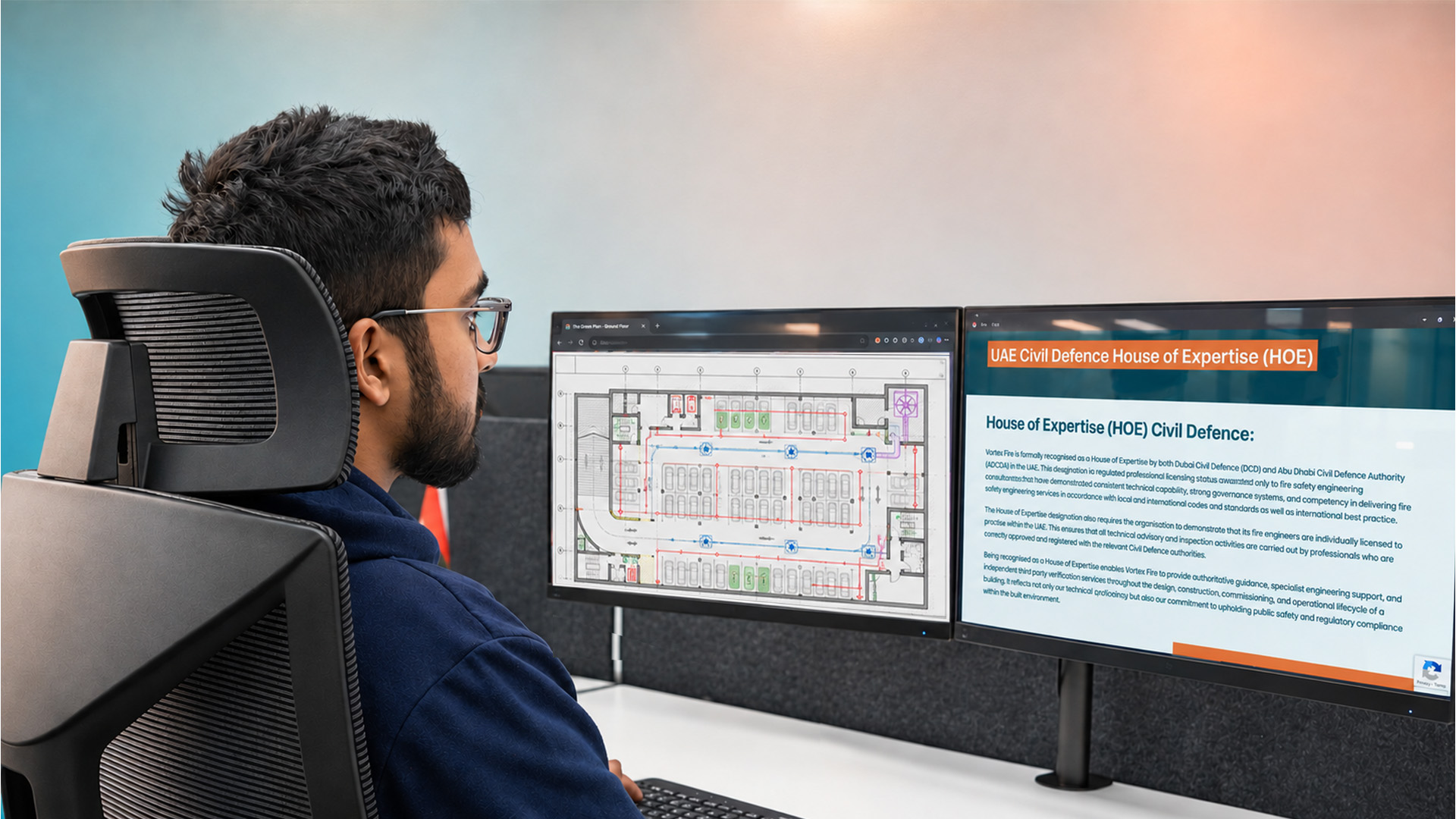
Internationally, NFPA 88A, Standard for Parking Structures, provides a framework for parking structure fire protection, while NFPA 13 addresses sprinkler system design and NFPA 70, Article 625, addresses EV charging electrical installations.
For projects in Saudi Arabia, the corresponding assessment must consider the Saudi Fire Protection Code (SBC 801) and other applicable provisions of the Saudi Building Code.
These codes provide the regulatory foundation for new developments, but their application requires an understanding of the existing building conditions, the proposed modification and the design assumptions adopted during the original approval.
Importantly, international standards should not be applied in isolation where local authority requirements govern the project.
When Is a Fire Safety Reassessment Necessary?
The determining factor is not simply the number of chargers proposed, but whether the modification affects the building’s approved fire and life safety provisions.
For example, introducing charging stations into a basement car park may warrant further evaluation where the proposed arrangement changes the use or configuration of parking areas, introduces electrical equipment within critical locations, affects firefighting access or requires modifications to existing fire protection systems.
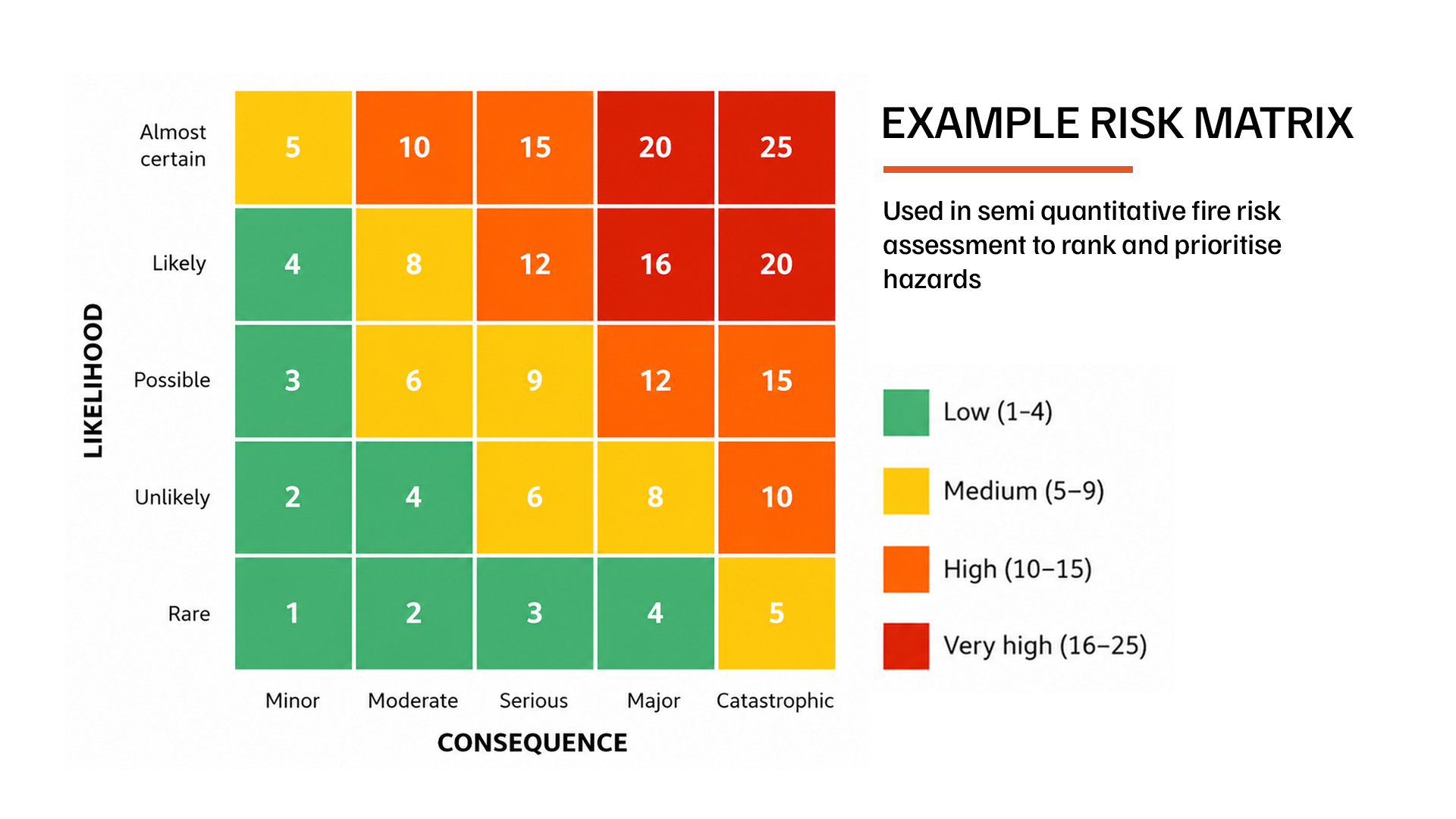
The assessment should establish whether the original design criteria remain valid and whether additional engineering analysis or changes to the approved fire strategy are justified.
This distinction is particularly important in retrofit projects, where the availability of original design documentation, the condition of existing systems and subsequent building alterations may influence the assessment.
Where a proposed modification could affect compliance with applicable fire safety requirements, consultation with the relevant authority should form part of the approval process.
Engineering Judgement Beyond Equipment Compliance
The principal challenge in retrofitting EV charging infrastructure is not demonstrating that an individual charger complies with its relevant product or electrical standards. It is demonstrating that the installation can be accommodated within the building’s overall fire safety design.
A technically defensible assessment requires an understanding of the original design intent, the credible fire scenarios associated with the modification and the continued suitability of the existing protection measures.
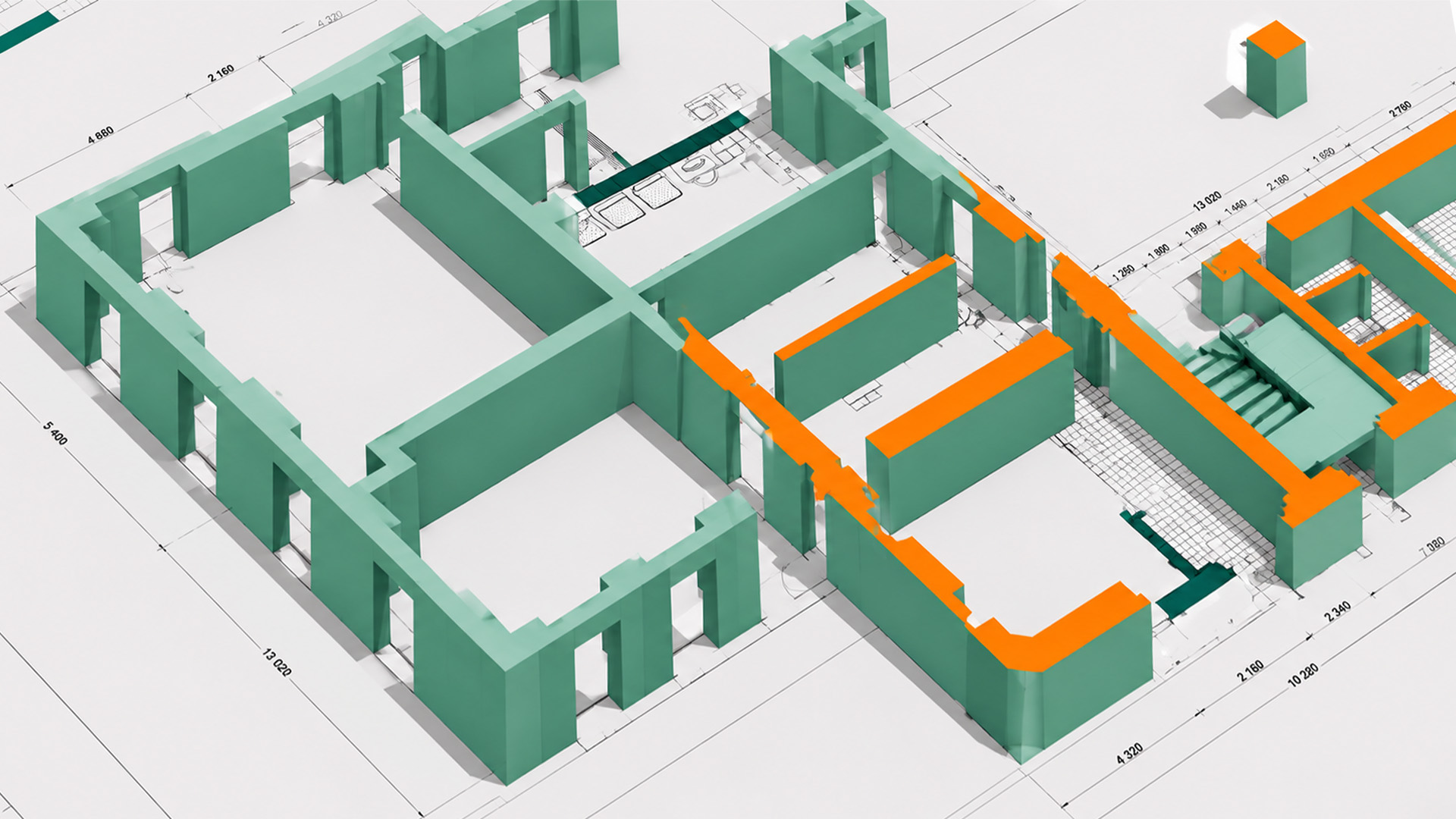
The question is not whether an existing basement car park was compliant when it was constructed, but whether its approved fire safety design basis remains valid following the proposed modification.
Addressing this question early in the retrofit process provides a stronger foundation for engineering decisions, design coordination and discussions with the relevant approving authorities.